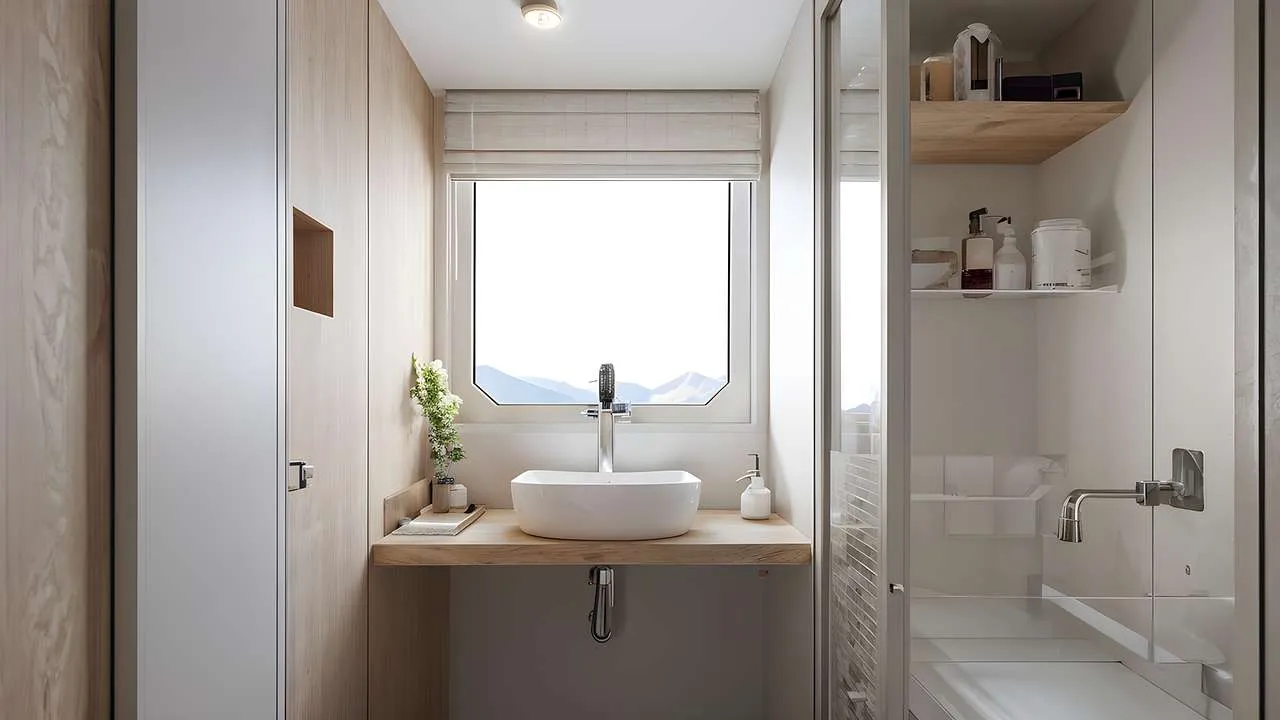
In small bathrooms, every inch matters. Expert-design methods can transform a cramped space into a functional, stylish room. This guide shares actionable small bathroom ideas to maximize space, light, and usability while ensuring durable materials and timeless appeal.
Space-Saving Layouts for Small Bathrooms
Layout choices determine how large a bathroom feels. Prioritize a shower over a tub, use clear glass, and consider a pocket door to gain floor space. A well-planned layout reduces congestion and makes daily routines smoother.
Shower vs Tub
For most small bathrooms, a shower in 32x60 or 36x60 inches feels roomier than a tub. A curbless or frameless shower with a clear door opens the space visually and improves accessibility. If you must have a tub, consider a compact alcove tub with a shower head.
Built-In Niches and Vertical Storage
Recessed niches in the shower and medicine cabinet niches keep toiletries at hand without taking floor space. Tall, slim cabinets or a tall linen tower utilize vertical space and reduce clutter.
Doors and Accessibility
Pocket doors or sliding doors eliminate door swing with minimal clearance. If you use an inward-opening door, ensure there is enough clearance in the vanity area. Pocket doors maximize usable floor area and create a more open plan.
Storage Solutions that Free Space
Integrated storage designs reduce clutter and make daily routines efficient. Combine a vanity with drawers, a wall cabinet, and slim shelves near the shower to keep essentials organized.
Vanities and Sinks
Choose a wall-hung or floating vanity to create the illusion of more floor space. A compact pedestal or under-mcounter sink can add bright, open space around the vanity area.
Niches, Hooks, and Racks
Install shower niches for shampoos, and add hooks or rails for towels. Magnetic strips or slim chrome racks keep metal grooming tools off the counters.
Materials Colors and Lighting
Light colors, reflective surfaces, and large-format tiles brighten the room and reduce visual noise. Keep grout lines minimal for a cleaner look and easier maintenance.
Color and Tile Choices
Opt for light neutrals with a single accent color. Large-format wall and floor tiles reduce grout lines and create a seamless, airy feel.
Mirrors and Lighting
A wide mirror or mirrored cabinet doubles the perceived space. Layer lighting with recessed ceiling lights, vanity lighting, and a backlit mirror to eliminate shadows.
Fixtures and Plumbing
Compact, water-efficient fixtures save space, curb water use, and simplify maintenance. Wall-hung toilets, slim trough sinks, and compact faucets help keep the floor clear and airflow uninterrupted.
| Option | Pros | Cons | Best For |
|---|---|---|---|
| Corner shower stall | Maximizes floor area; open feel | Requires ventilation planning | Very small footprints |
| Floating vanity | Air above floor; easier cleaning | Edge storage may be limited | Vertical storage needs |
| Pocket door | No swing; expands layout | Installation cost | Tight layouts |
| Wall-hung toilet | Smaller footprint | Requires sturdy framing | Compact spaces |
Design on a Budget and Maintenance
Smart materials, e.g., porcelain tiles and acrylic, balance price and durability. Finish hardware with moisture-resistant finishes and seal grout annually to prevent staining. A well-planned renovation can be staged to spread cost over time.
Makeover Checklist
Before you begin, measure precisely, assess plumbing and electrical, and source moisture-resistant materials. Create a mood board with samples for color, tile, and fixtures. A phased approach helps you stay on budget and achieve a cohesive look.
Conclusion, by applying space-saving layouts, strategic storage, and bright finishes, small bathrooms can feel larger and more functional without sacrificing style or comfort.